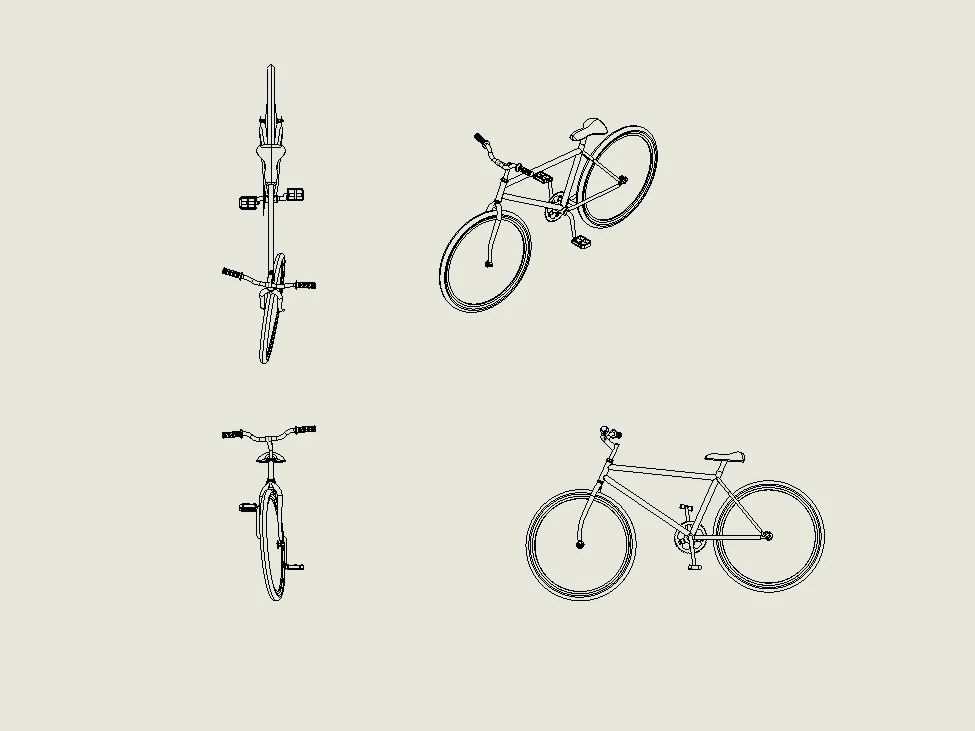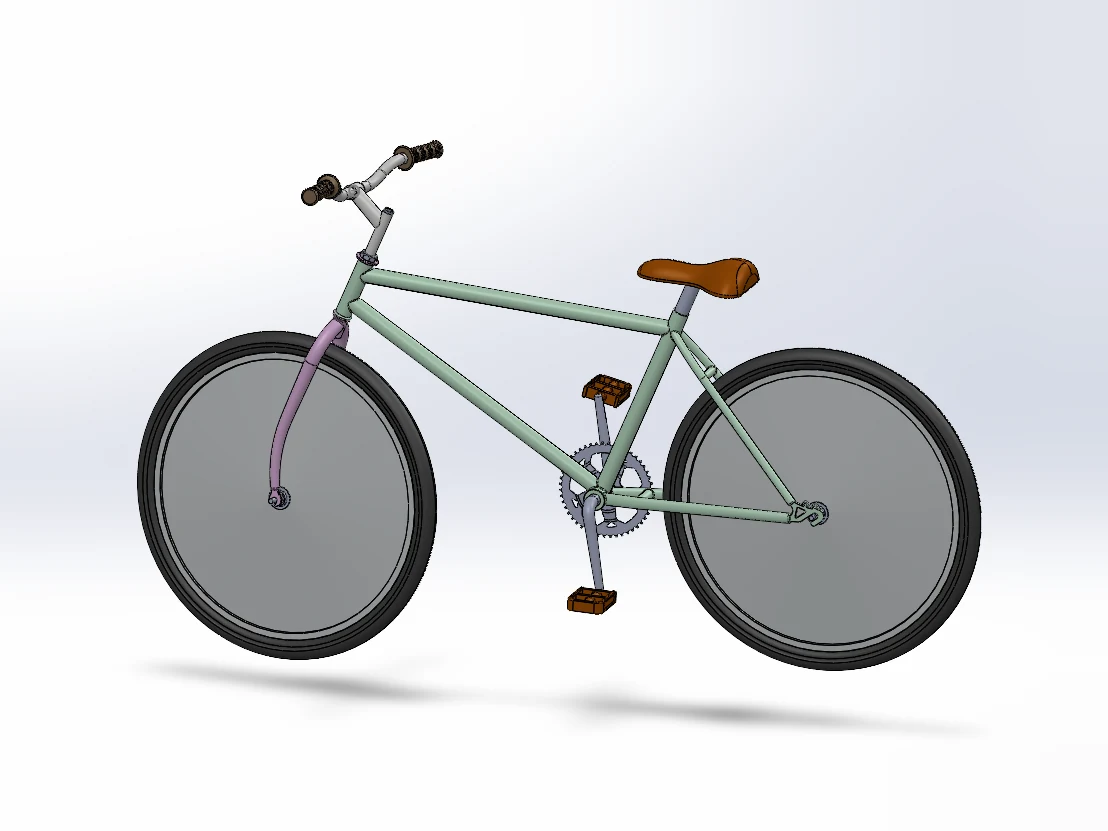
This was my final project for ME 371, Computer-Aided Design, at the City College of New York in fall 2025. I modeled a bicycle in SolidWorks, made a drawing for each part, and checked whether the frame, fork, handlebar, saddle, sprocket with pedals, and wheels could take everyday riding loads.
Loads and materials
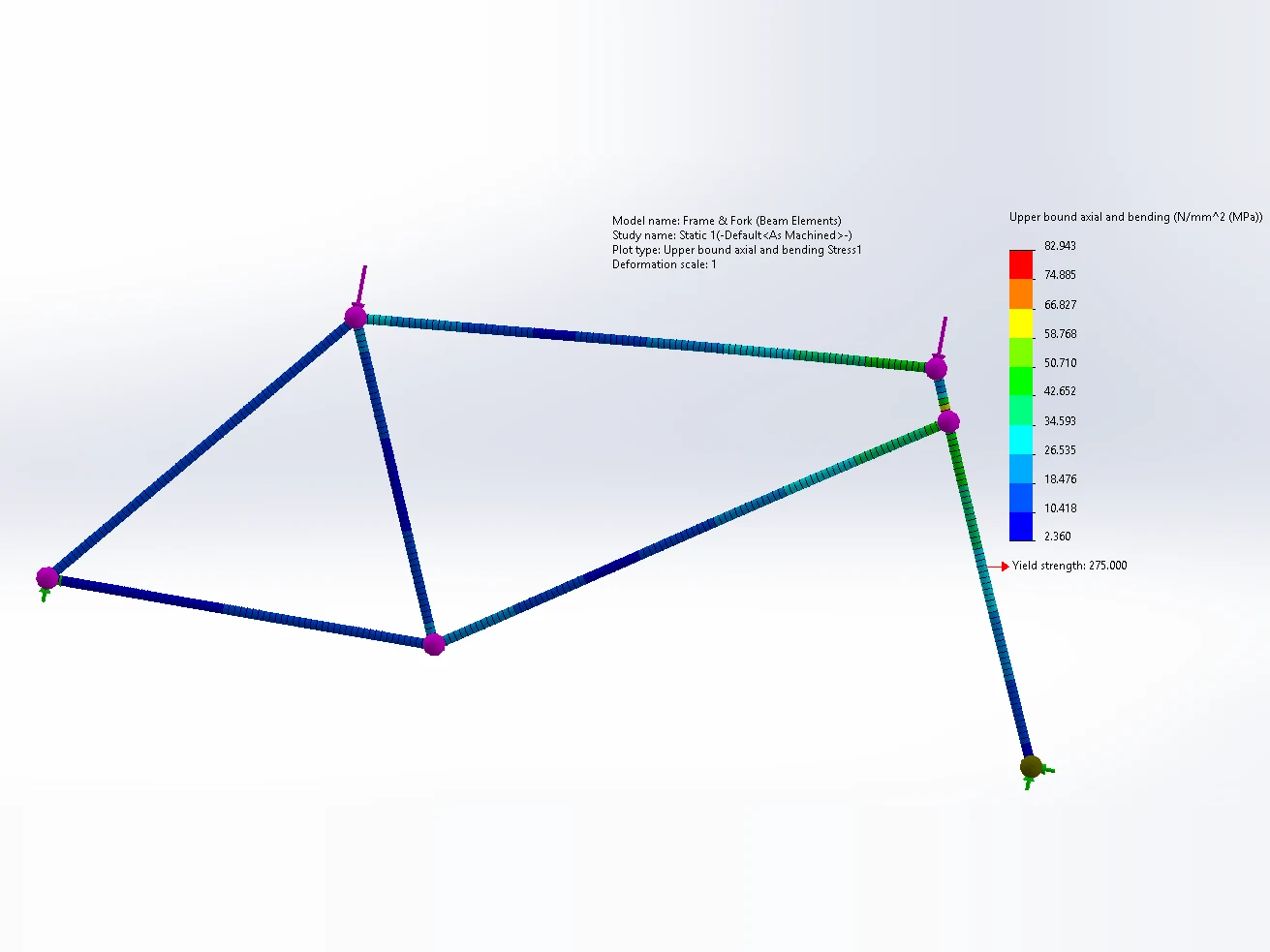
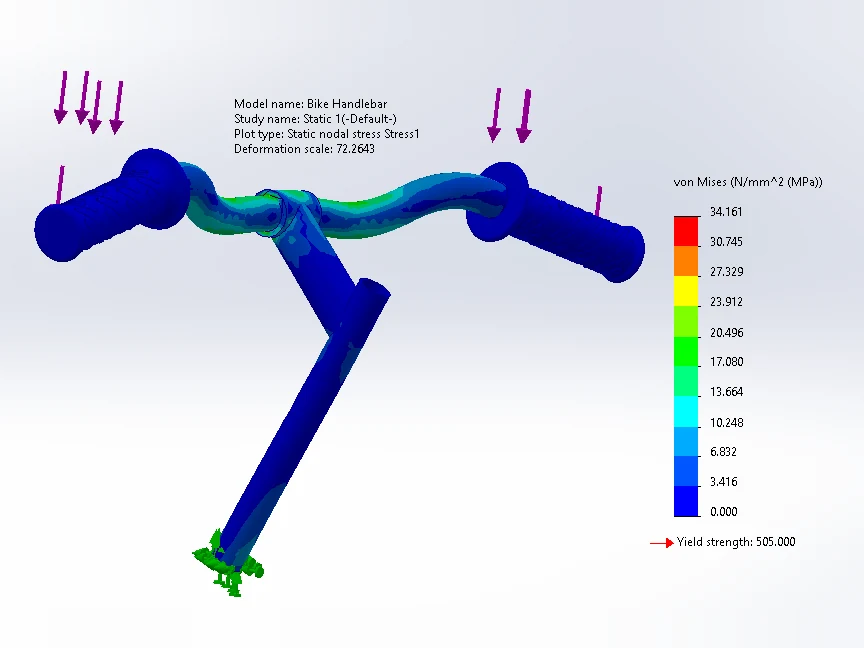
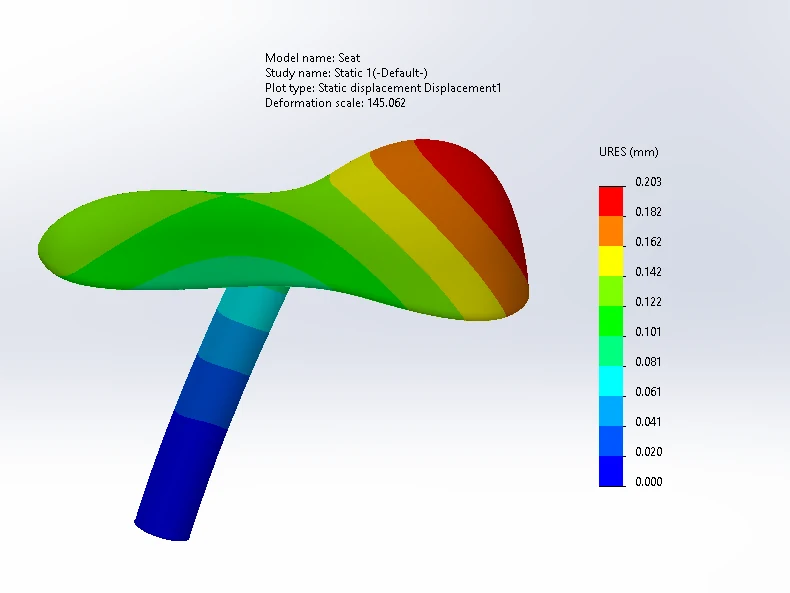
I based the geometry and loads on existing bikes. The frame and fork carry 125 lb at the seat and 25 lb at the handlebars. In the part studies the saddle takes 556 N, the handlebar and fork 111.2 N, and the crank 200 N at the pedals with 50 N at the chainring. The frame, fork, sprocket, pedals and wheels are aluminum 6061-T6, the handlebar is aluminum 7075-T6, and the saddle and seat post are alloy steel.
Checking the simulation by hand
I modeled the frame and fork with beam elements in SolidWorks, then solved the same structure in MATLAB with the stiffness matrix method. Peak combined axial and bending stress came out at 86.6 MPa by hand and 82.9 MPa in SolidWorks, a 4.35% difference, with factors of safety of 3.17 and 3.32. Displacements differed more (0.9 mm against 1.69 mm), most likely because the hand model uses idealized supports and loads.
Results
- Handlebar: 34.2 MPa peak von Mises stress, factor of safety 14.8.
- Saddle and seat post: 34.1 MPa, factor of safety 18.2.
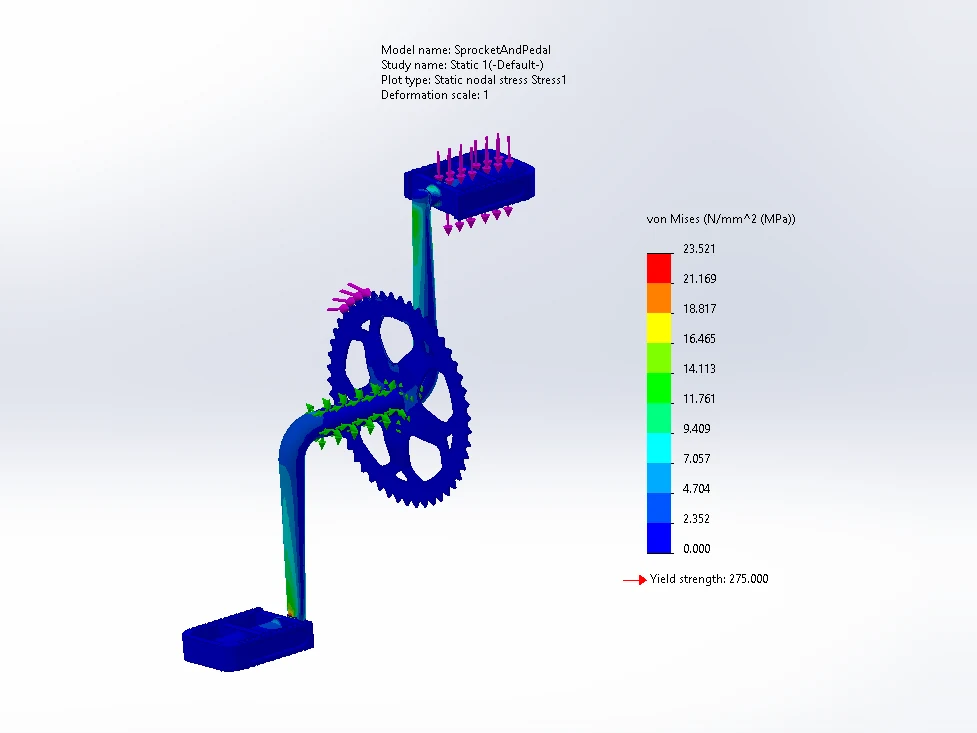
- Sprocket and pedals: 23.5 MPa, factor of safety 11.7.
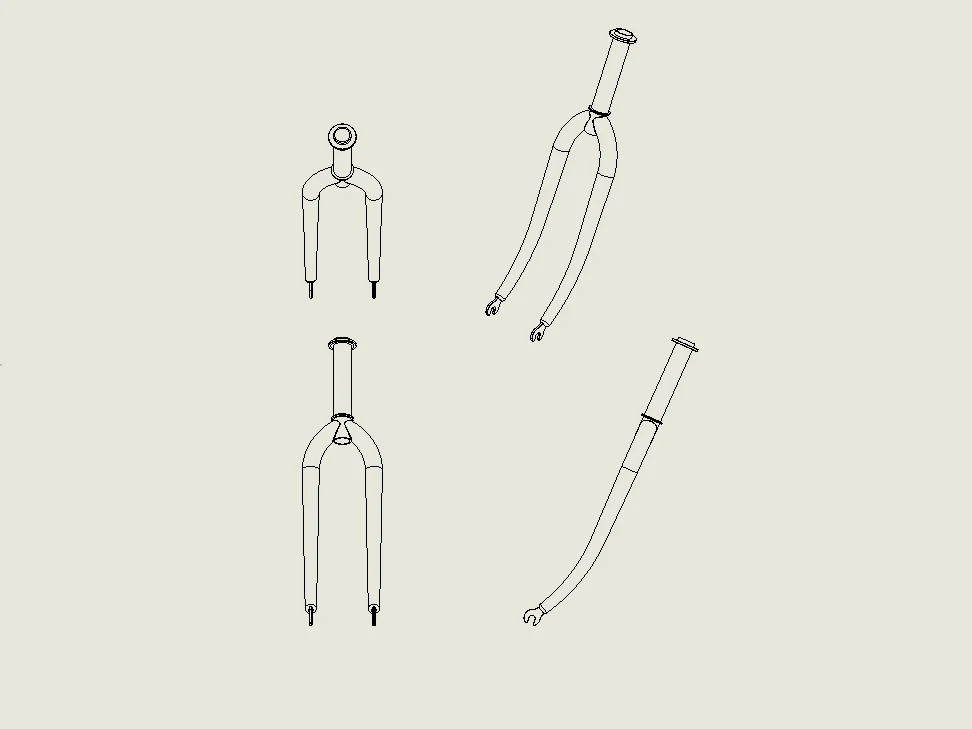
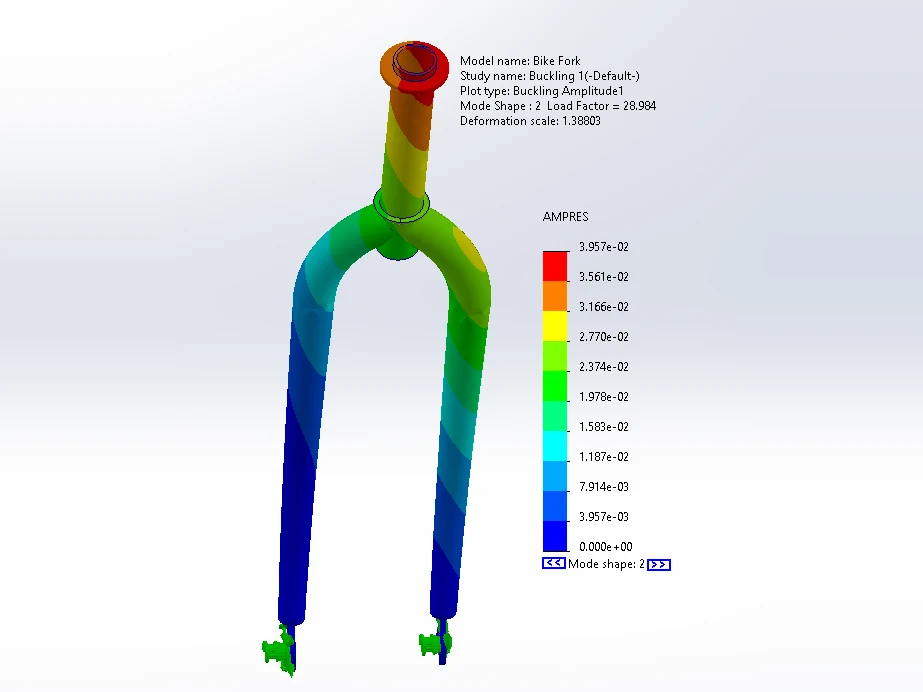
- Fork: 113.6 MPa, factor of safety 2.4. A buckling study put the critical load at about 29 times the applied load, roughly 3,200 N.
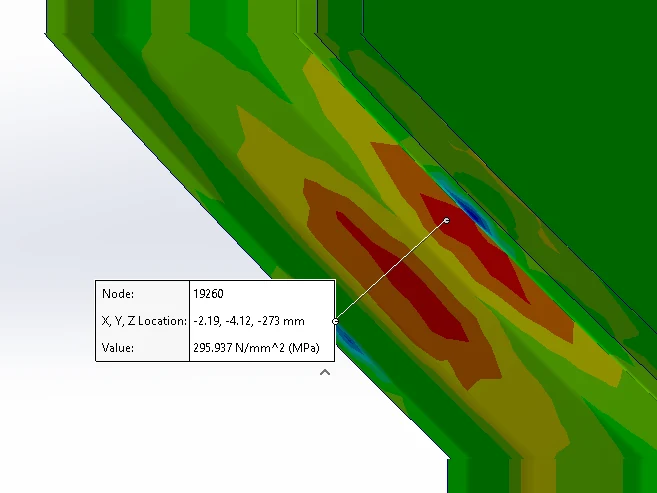
- Wheel: a drop test from 150 mm, about the height of a curb, peaked at 295.9 MPa against an ultimate strength of 310 MPa, a factor of safety of 1.05.
Design changes
The wheel has the least margin. A thicker rim or internal stiffeners would spread the impact load, and carbon fiber, which most disc wheels use, would be lighter and tougher at a higher cost. For the frame and fork, thicker or tapered tubes would lower peak stress and add stiffness, at some cost in weight and price.
Full renders are coming soon.